
4 Benefits of Annotated Wireframes for Mobile Apps
Annotated wireframes provide organization and structure to any mobile app development project. Learn more about how to use them in this article.
Updated February 18, 2026

The global smartwatch market continues to grow, with experts projecting its size to more than double by 2033. But if you’re in the market for a new watch, it’s time to look beyond brand name, screen size, battery life, and sensors. The real smartwatch experience happens in the companion app.
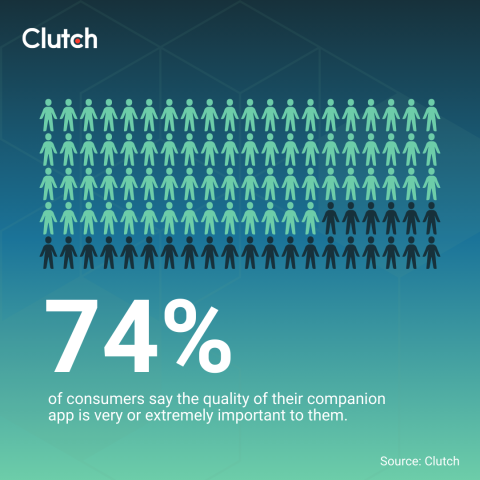
According to new research from Clutch, 74% of consumers say the quality of their companion app is very or extremely important to them. The data also shows that 58% check their app at least once a day, making it a critical piece of the overall smartwatch experience.
Looking for a Mobile App Development agency?
Compare our list of top Mobile App Development companies near you
So what should you look for in an app experience when shopping for a smartwatch? Learn why companion apps should factor into your next wearable purchase.
The watch captures important health signals, but the app interprets them and puts them into a form that you can understand and use to refine your lifestyle.
For example, most users access their companion app to:
This is why companion apps should be an important part of the buying decision for users. When an app is poorly designed and the data is hard to interpret or feels inconsistent, users become more likely to disengage. That could mean using the watch less than you intended when you purchased it, even if you still love the hardware itself.
A well-designed app will make your everyday experience with your wearable much more enjoyable by reducing friction and simplifying your health journey.
You don’t need access to the latest features or flashy visuals to enjoy a great smartwatch app experience. The best companion apps tend to be those that are intuitive, accurate and easy to use. The most important features are:
Smartwatch apps should provide the most frequently sought information in clear, accessible dashboards. This makes it easy to find the data you want in a few taps. You shouldn't have to dig through long menus to find answers.
Health data should sync from the device to the companion app accurately and frequently. When updates on steps and heart rate arrive hours late, it becomes difficult to track health information in real time, causing some users to disengage.
Most interactions with smartwatch apps are very brief. Users may only open the app for seconds to find the specific information. That’s why the best companion apps feature an intuitive navigation system.
Logical feature groupings and predictable layouts often matter more than dense lists of features that may not be used very often. Unlike most app designs, where the goal is to keep the user in the app as long as possible, wearable companion apps are designed to provide quick insights.
Smartwatch users don’t simply want to see their health metrics. They want to understand how their data evolves over time. For example, someone checking their step count during a walk may also want to know whether they’ve exceeded yesterday's count.
That’s why the best smartwatch apps provide clear context. They show users how their metrics compare to previous results, so they know whether they’re improving or need to change something to get there.
Providing contextual insights helps users make more informed decisions about their day-to-day activities, and that’s where smartwatch apps become more valuable. For example, someone may use an app during their walks to determine whether to continue or stop, based on their previous trends. The best apps provide this kind of insight in just a few taps.
All users have their own unique priorities and design preferences. Some only care about their performance in the gym, while others want to focus on sleep and productivity levels.
That’s why great smartwatch apps give users the ability to customize their app layout based on their preferences. This should be a relatively straightforward process. If customization involves complex setup flows, many users will simply avoid it and get less value out of the app as a result.
A weak smartwatch companion app will frustrate users and make them feel like they’re getting less value out of the watch itself. Even small issues can compound over time to make users feel fed up and cause them to disengage.
For example, inconsistent or delayed syncing is one of the fastest issues to erode consumer trust. When users notice missing workouts or inaccurate step counts, they stop relying on the device when making future health decisions. That leads them to look elsewhere and decreases their odds of staying loyal to the brand.
Confusing layouts are another common form of friction within smartwatch apps. If the dashboards change without a clear logic or don’t present information intuitively, users may feel like the app is more effort than it’s worth. This discourages habitual use, which tends to be critical for long-term adoption.
Finally, notification overload can exacerbate these challenges. When users receive frequent alerts that feel irrelevant to their goals, they may mute altogether, which removes an app’s best tool for maintaining engagement.
Ultimately, when users struggle with a smartwatch app, they tend to think less of the device itself. That often leads to using the watch less or even replacing it with another model, regardless of the quality of the hardware.
Looking to build an app? Check out Clutch’s App Development Checklist.
If you’re choosing a new smartwatch, focus as much on the app as the device itself. The app’s user experience could be the deciding factor in whether your watch becomes a daily tool or an unused accessory.
Key questions to ask include:
You can answer these questions online by reviewing user screenshots, video reviews, and other demo content from trusted outlets. As you shop, remember that it’s as important to review the different apps as it is to try on different watches.
Several wearables are frequently praised for their strong app experiences. The best option for you could vary based on your priorities.
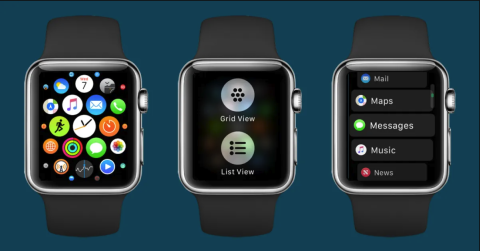
The Apple Watch features an app that’s tightly integrated with the broader Apple ecosystem. It’s highly intuitive for anyone who has an iPhone and offers fast syncing with minimal configuration steps. This is a great option if you want an easy-to-use, high-quality app with a familiar layout.
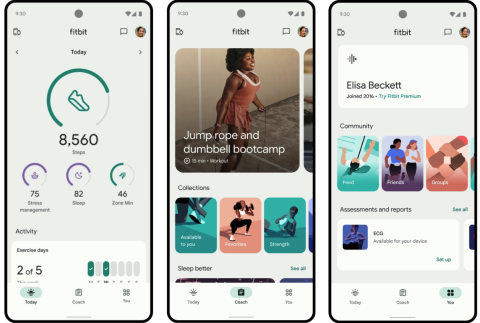
Fitbit’s app is another market favorite. Its focus is on habit formation and long-term consistency, emphasizing trend tracking and progress visualization. Rather than overwhelming users with metrics, it frames data in a way that supports daily engagement.
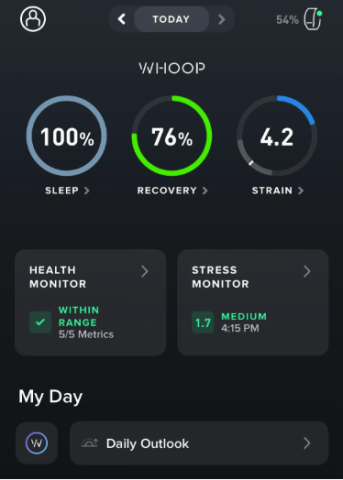
Many athletically inclined users appreciate health-insight platforms like Garmin and WHOOP. These brands invest heavily in data interpretation to help users learn more from their health data. Either could be a good fit if you value deep context in your health journey.
A smartwatch’s companion app is a key driver of brand loyalty. Sensors and screens often look similar across devices, but the software experience can vary dramatically. This means developers are increasingly focusing on differentiation through app design.
The key for manufacturers is to create an app that users want to engage with daily. This turns smartwatch use into a habit, making it part of an ongoing routine rather than a novelty checked once in a while.
Most consumers shopping for a new smartwatch understandably check out the hardware first. But don’t forget to look beyond the watch to its companion app. This is what you’ll use daily to gain valuable insights into your health journey. For long-term satisfaction, focus on an app experience that provides clear, intuitive insights with minimal friction.